Research Library · Projects · Teachers
Sajah Popham
Herbalist · The Plant Path, School of Evolutionary Herbalism
His lessons on herbs, their energetics and their planets — checked and summarised.
- summaries
- 11summaries
- videos
- 11videos
- linked sources
- 157linked sources
Learn from Sajah Popham
Sajah Popham
Herbalist and host of The Plant Path; founder of the School of Evolutionary Herbalism.
He teaches herbal medicine through the energetics of plants and people, and herbal astrology alongside it.
evolutionaryherbalism.com ↗ Every summary of Sajah Popham’s work →
The research
 ▶ 36 min
Members · preview open
Planets & cycles · Plants & herbs · Video research · Venus · Sajah Popham · Medical astrology
Venus in excess and deficiency
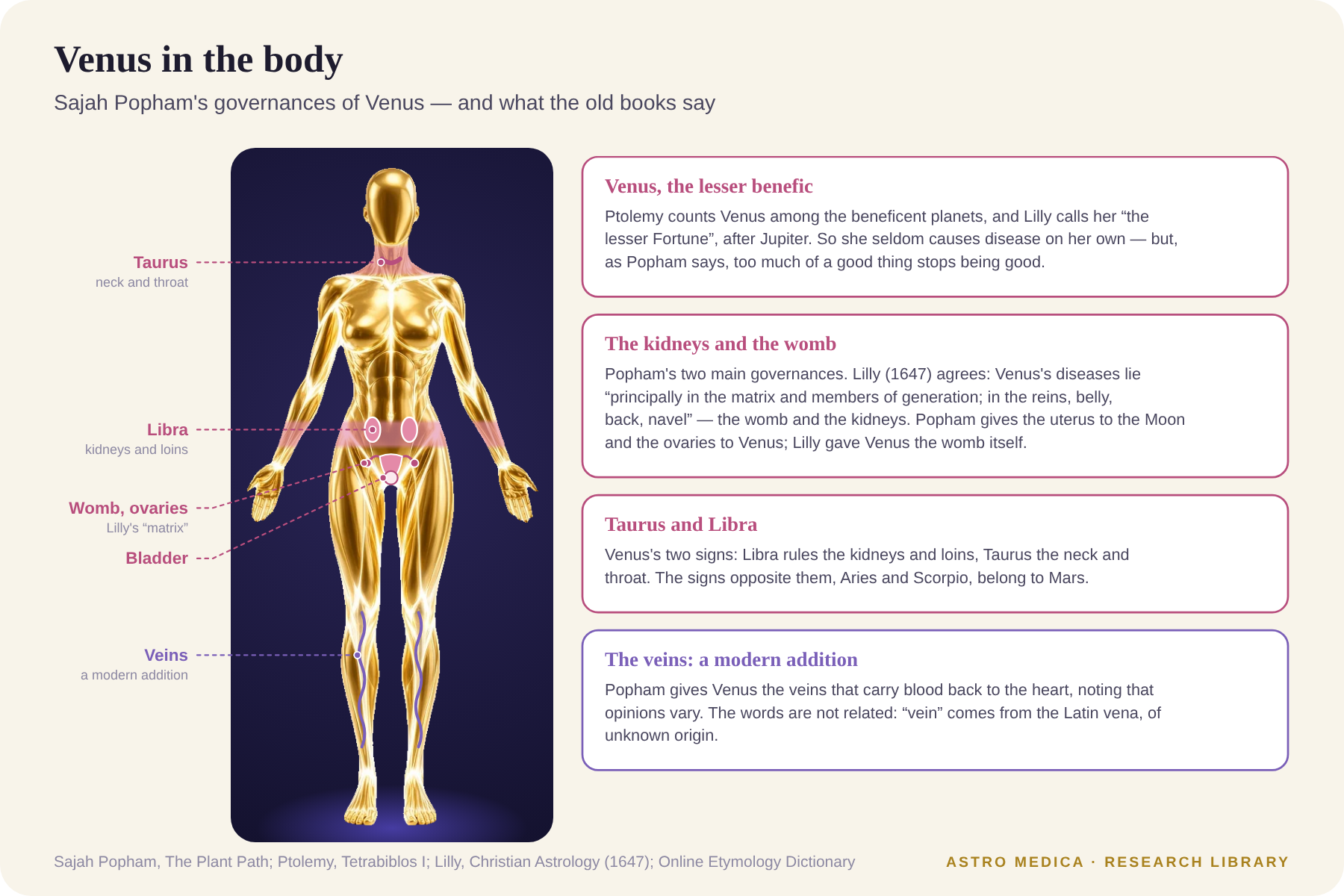
For herbalist Sajah Popham, Venus rules the kidneys and the female reproductive system, and her nature is to relax. In excess the tissues grow too lax — leaks, heavy periods, prolapse, varicose veins; in deficiency too tense — painful periods, cramps, a tight urinary tract. The astrology is the old one: Lilly put Venus's diseases in the womb and the kidneys. His herbs are mostly tradition. Where they have been tested, vitex helps PMS (not “oestrogen dominance”), raspberry leaf made no difference to labour, and black cohosh did no better than placebo for hot flushes. For a leaking bladder, the best-tested remedy is pelvic floor training.
1647 Lilly puts Venus's diseases “principally in the matrix and members of generation; in the reins” — the womb and the kidneys
12 min read · 27 sources (13 peer-reviewed)
 ▶ 49 min
Members · preview open
Planets & cycles · Plants & herbs · Video research · The Sun · Sajah Popham · Hawthorn · Angelica · Ashwagandha · St John's wort
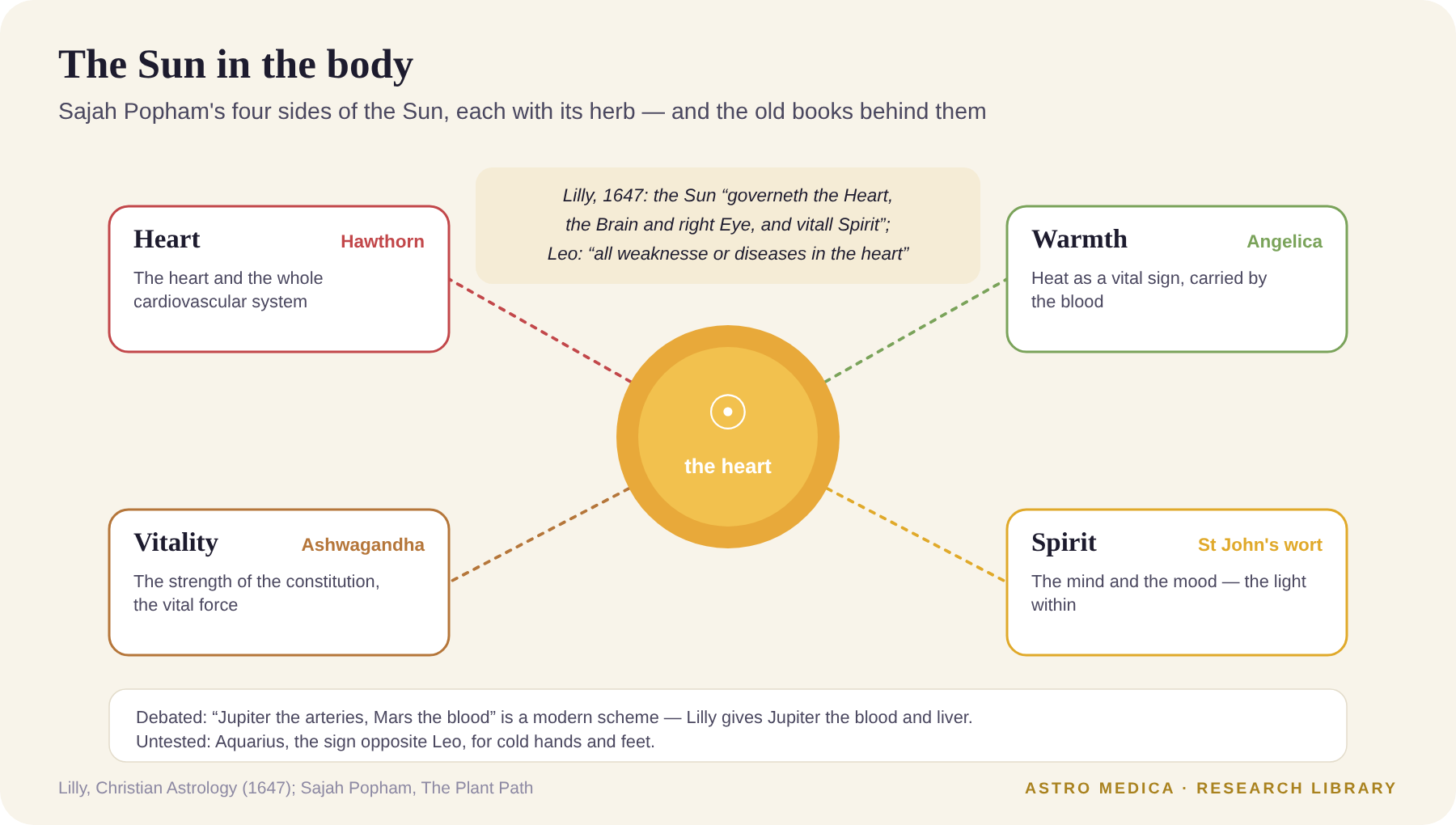
The Sun's herbs: heart, warmth, vitality and spirit
In medical astrology the Sun rules the heart and the vital force, and Sajah Popham matches its four sides with four herbs: hawthorn for the heart, angelica for warmth, ashwagandha for vitality and St John's wort for the spirit. The astrology is the old one — Lilly in 1647 gave the Sun “the Heart, the Brain and right Eye, and vitall Spirit”. The evidence behind the herbs runs from strong to none: St John's wort matches antidepressants for mild to moderate depression; hawthorn eases heart-failure symptoms without saving lives; ashwagandha has small trials for stress and sleep; angelica has no trial of its own.
1647 Lilly: the Sun “governeth the Heart, the Brain and right Eye, and vitall Spirit”
9 min read · 12 sources (9 peer-reviewed)
 ▶ 9 min
Members · preview open
Plants & herbs · Video research · Planets & cycles · Hawthorn · The Sun · Sajah Popham
Hawthorn, the heart herb
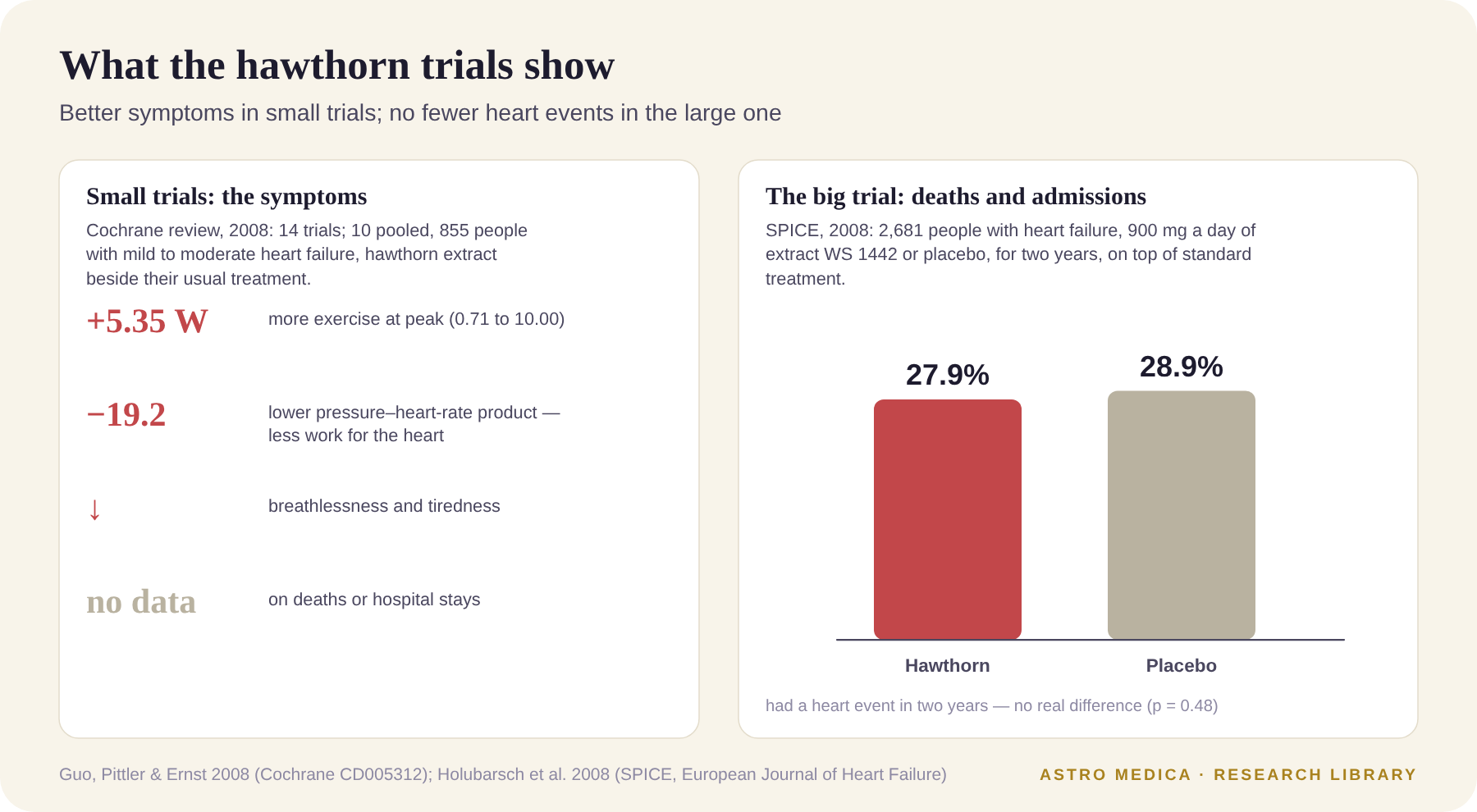
Sajah Popham gives hawthorn to the Sun as the herb of the heart: a slow, food-like tonic that strengthens the heart muscle, eases the vessels and calms an anxious mind. The trials split the claim in two. In small trials of people with heart failure, hawthorn extract improved exercise and symptoms; in the one large trial, 2,681 people over two years, it didn't reduce heart events. The EU accepts it, by long use, for palpitations from mild anxiety and for mild stress and sleep. No trial supports it for ADHD in children.
+5.35 W more exercise at peak with hawthorn extract in pooled heart-failure trials
8 min read · 7 sources (4 peer-reviewed)
 ▶ 9 min
Members · preview open
Plants & herbs · Video research · Planets & cycles · Angelica · The Sun · Sajah Popham
Angelica, the warming bitter
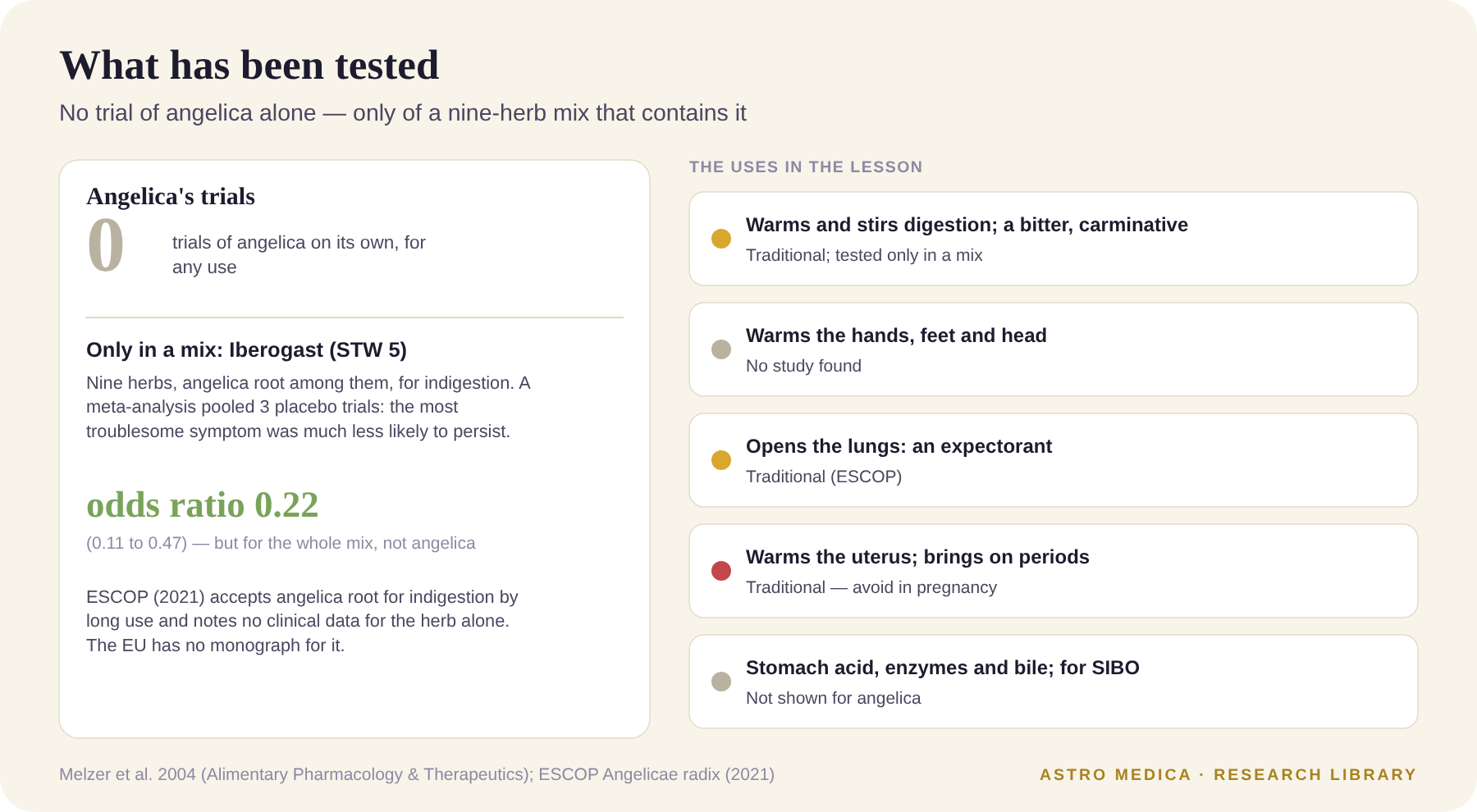
Sajah Popham's herb of the Sun's warmth is garden angelica: a warming, fennel-like aromatic bitter that he says lights a fire in the gut, then sends warmth and blood out to the hands, feet, head, lungs and uterus. Culpeper put it “under the Sun in Leo”. It has no trial of its own: it has been tested only as one of nine herbs in Iberogast, which helped indigestion. Herbal references accept it for indigestion by long use. Two cautions the lesson leaves out: its root contains sun-sensitising compounds, and it is avoided in pregnancy.
0 trials of angelica on its own, for any use, that we could find
7 min read · 6 sources (2 peer-reviewed)
 ▶ 6 min
Members · preview open
Plants & herbs · Video research · Mind & nervous system · Ashwagandha · The Sun · Sajah Popham
Ashwagandha, the calm adaptogen
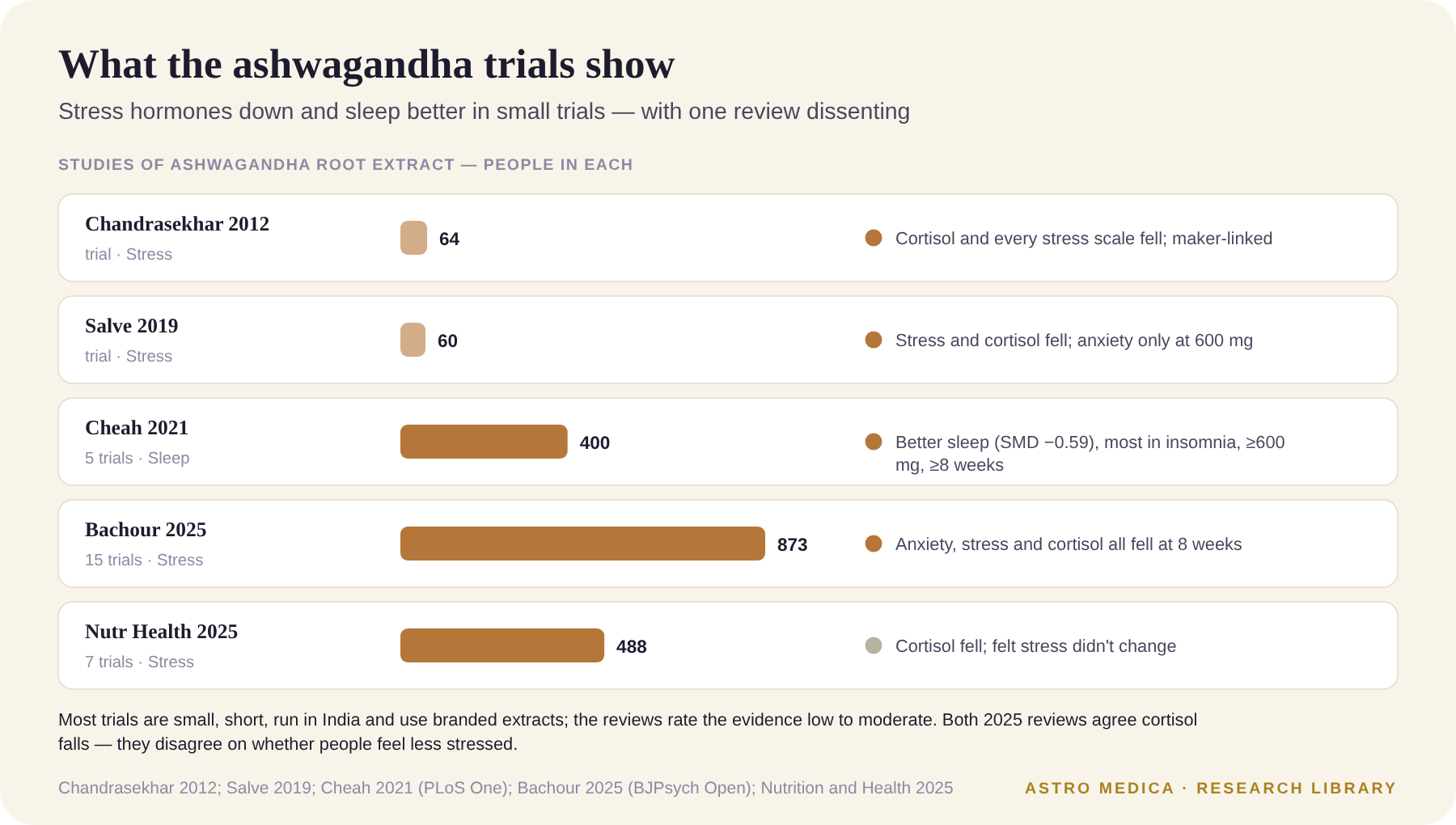
Sajah Popham's herb of the Sun's vitality is ashwagandha, the Ayurvedic rasayana: gently warming, building strength without overstimulating, calming but not sedating, and balancing the immune system. In small trials, mostly in India, ashwagandha root extract lowered cortisol and stress scores and improved sleep; two 2025 reviews agree on cortisol but disagree on whether people feel less stressed. His claim that it raises iron rests on one student's blood test. The lesson leaves out its cautions: rare liver injury, effects on the thyroid, and a ban in Denmark.
15 trials, 873 people: anxiety, stress and cortisol fell at 8 weeks
7 min read · 10 sources (8 peer-reviewed)
 ▶ 10 min
Members · preview open
Plants & herbs · Video research · Mind & nervous system · St John's wort · The Sun · Sajah Popham
St John's wort, the midsummer flower
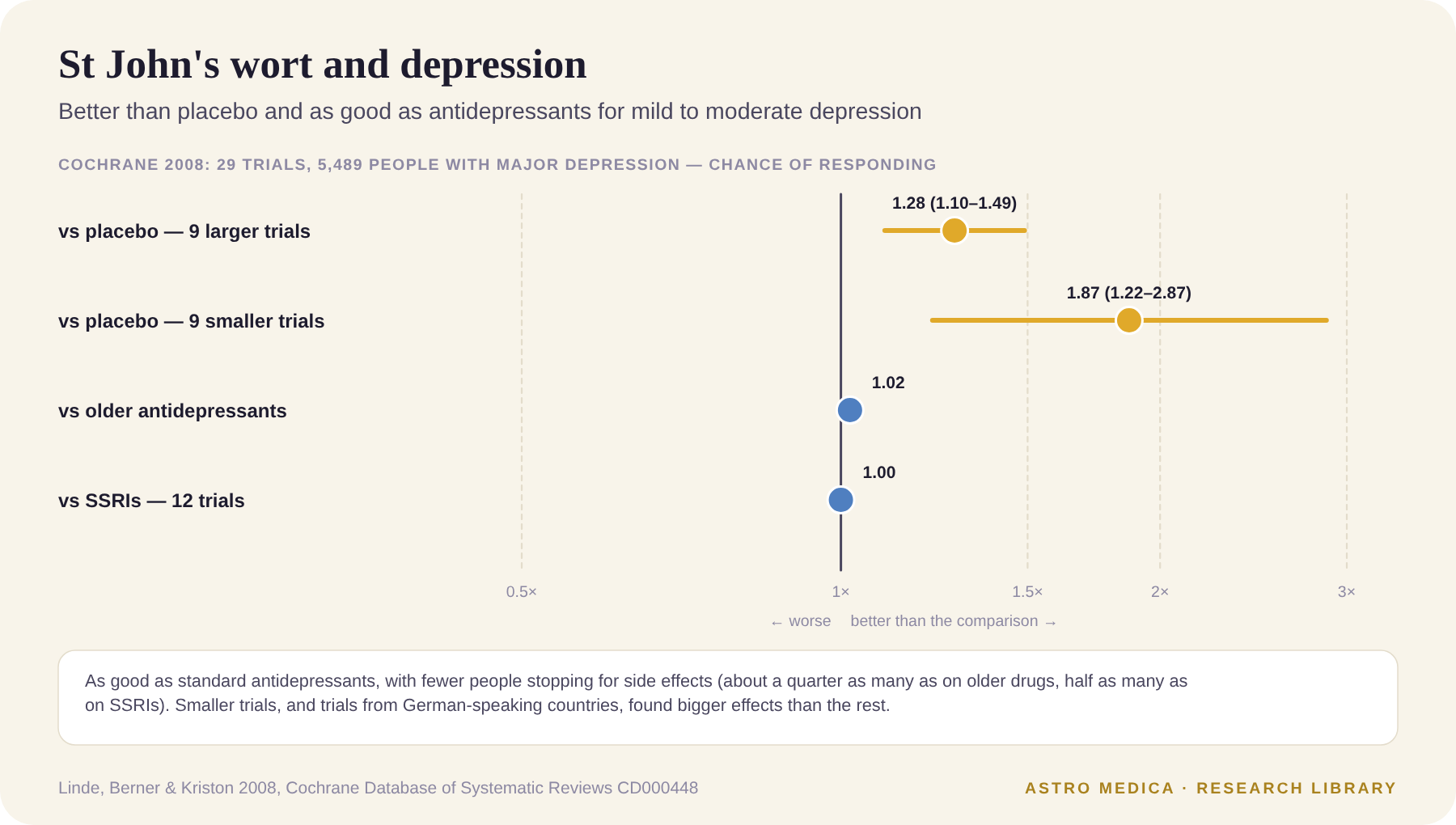
Sajah Popham's herb of the Sun's spirit is St John's wort, the yellow flower that blooms around St John's Day at midsummer. For depression the evidence is strong: in 29 trials of 5,489 people it beat placebo and matched standard antidepressants, with fewer people stopping for side effects. He is right that it works on the liver — it speeds up how the gut and liver clear many medicines, from the contraceptive pill to transplant drugs — and that makes it one of the most interaction-prone herbs there is. For nerve pain, its one trial found no effect.
29 trials, 5,489 people with depression: St John's wort beat placebo and matched standard antidepressants
8 min read · 7 sources (6 peer-reviewed)
 ▶ 93 min
Members · preview open
Video research · Plants & herbs · Planets & cycles · Judith Hill · Sajah Popham · Medical astrology
Judith Hill: time matters
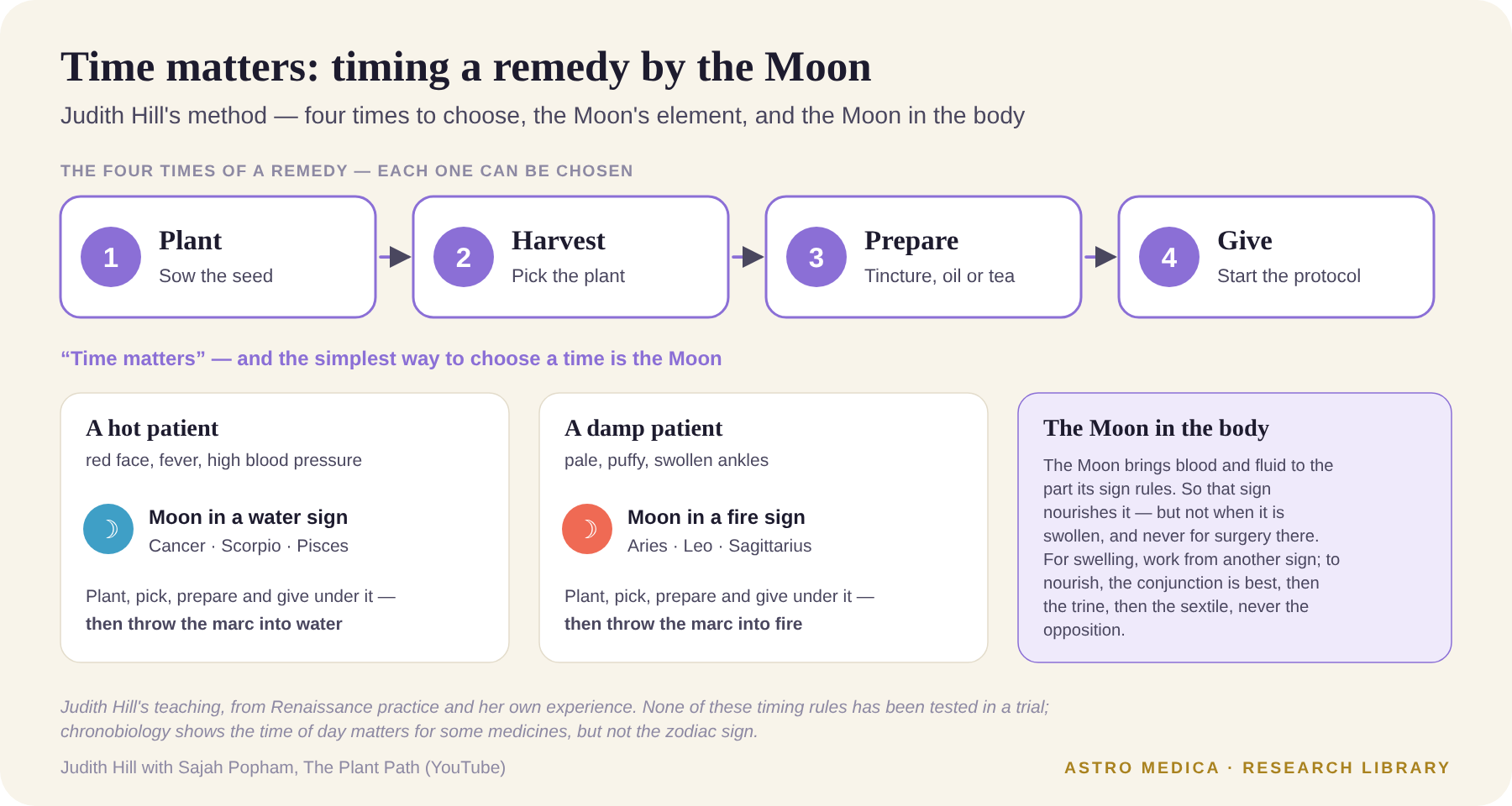
Judith Hill has practised medical astrology since 1983 and founded the Academy for Astrological Medicine. Her message to herbalists is that time matters: when a herb is planted, picked, prepared and given can be chosen by the Moon. Her history mostly holds, with corrections — the surgery rule she credits to Ptolemy first appears in a 10th-century commentary, and Alan Leo was fined, never jailed. Her timing methods are tradition and practice, untested in trials, and the best-known controlled tests of astrology have found astrologers at chance.
4 times in a remedy's life that can be chosen: planting, harvesting, preparing and giving
14 min read · 24 sources (5 peer-reviewed)
 ▶ 13 min
Members · preview open
Plants & herbs · Video research · Nutrition · Burdock · Spring tonics · Sajah Popham
Burdock, the all-purpose alterative
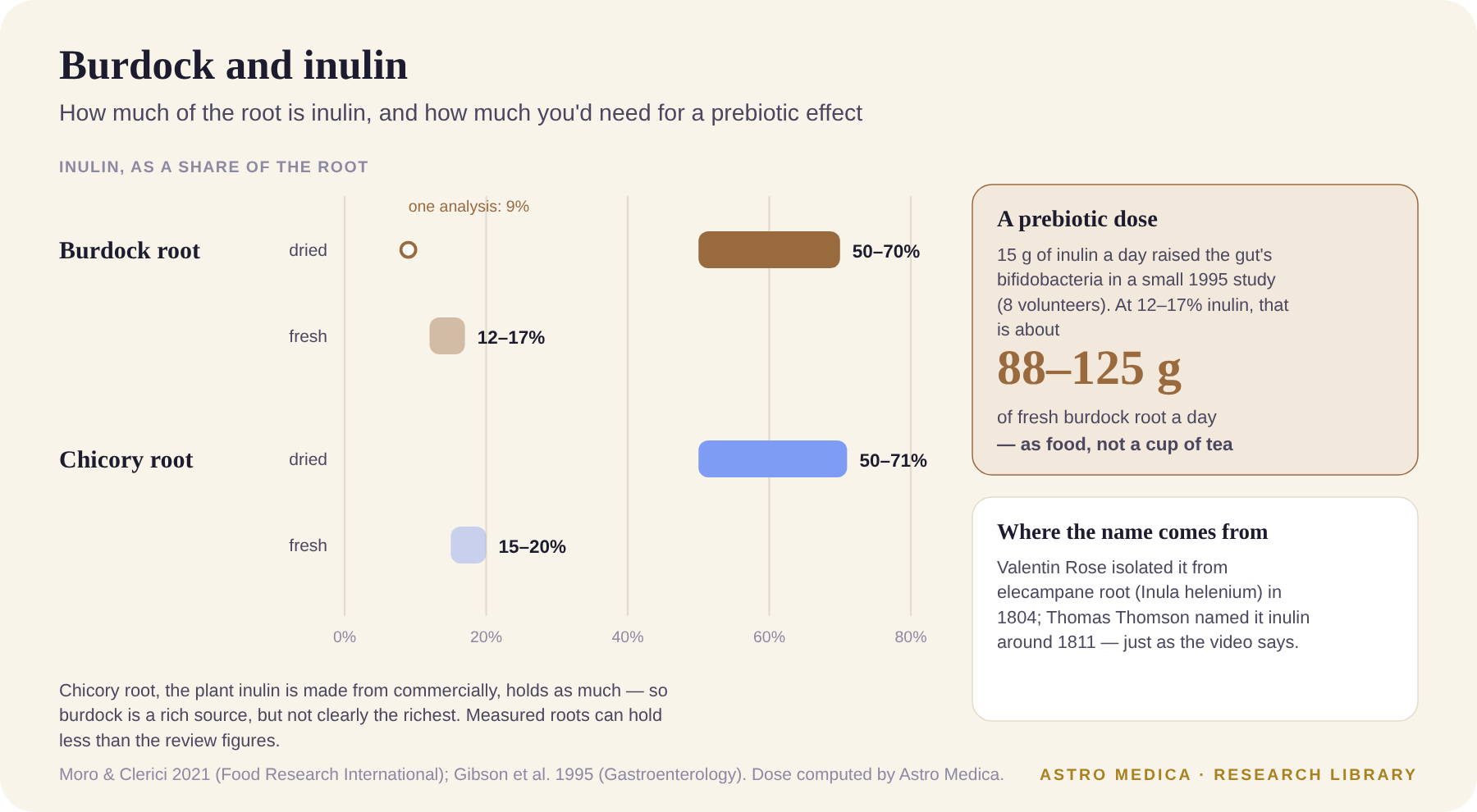
In Sajah Popham's spring tonics lesson, burdock root is “the all-purpose alterative”: a mild, almost neutral herb that cleanses the blood through the liver, lymph, kidneys and skin while its inulin feeds the gut. The inulin is real — half or more of the dried root — and inulin does feed good gut bacteria in people, though a prebiotic dose means about 88–125 g of fresh root. For the skin the EU accepts burdock as a traditional remedy, without robust trials; for the liver and lymph we found no studies. It was an ingredient of the Hoxsey cancer tonic, which is no cure, as the lesson itself says.
50–70% of dried burdock root is inulin, by the review figures — 12–17% of the fresh root
9 min read · 13 sources (6 peer-reviewed)
 ▶ 8 min
Members · preview open
Plants & herbs · Video research · Minerals & tissue salts · Dandelion · Spring tonics · Sajah Popham
Dandelion leaf, the potassium diuretic
In Sajah Popham's spring tonics lesson, dandelion leaf is “the universal diuretic”: bitter, cooling, drying, and “potassium-sparing” because it brings in the potassium that a water tablet washes out. The one study in people, 17 volunteers over a single day with no placebo group, found a real but small diuretic effect. The leaf is rich in potassium — but that is a reason for care, not a swap for medicine: the EU warns against it with kidney failure, diabetes or heart failure. Its use for blood pressure rests on rats; for gout, bile, anaemia and bones, on tradition.
17 volunteers in the only study of dandelion leaf as a diuretic in people — one day, no placebo group
9 min read · 11 sources (4 peer-reviewed)
 ▶ 11 min
Members · preview open
Plants & herbs · Video research · Minerals & tissue salts · Stinging nettle · Spring tonics · Sajah Popham
Nettle, the mineral powerhouse
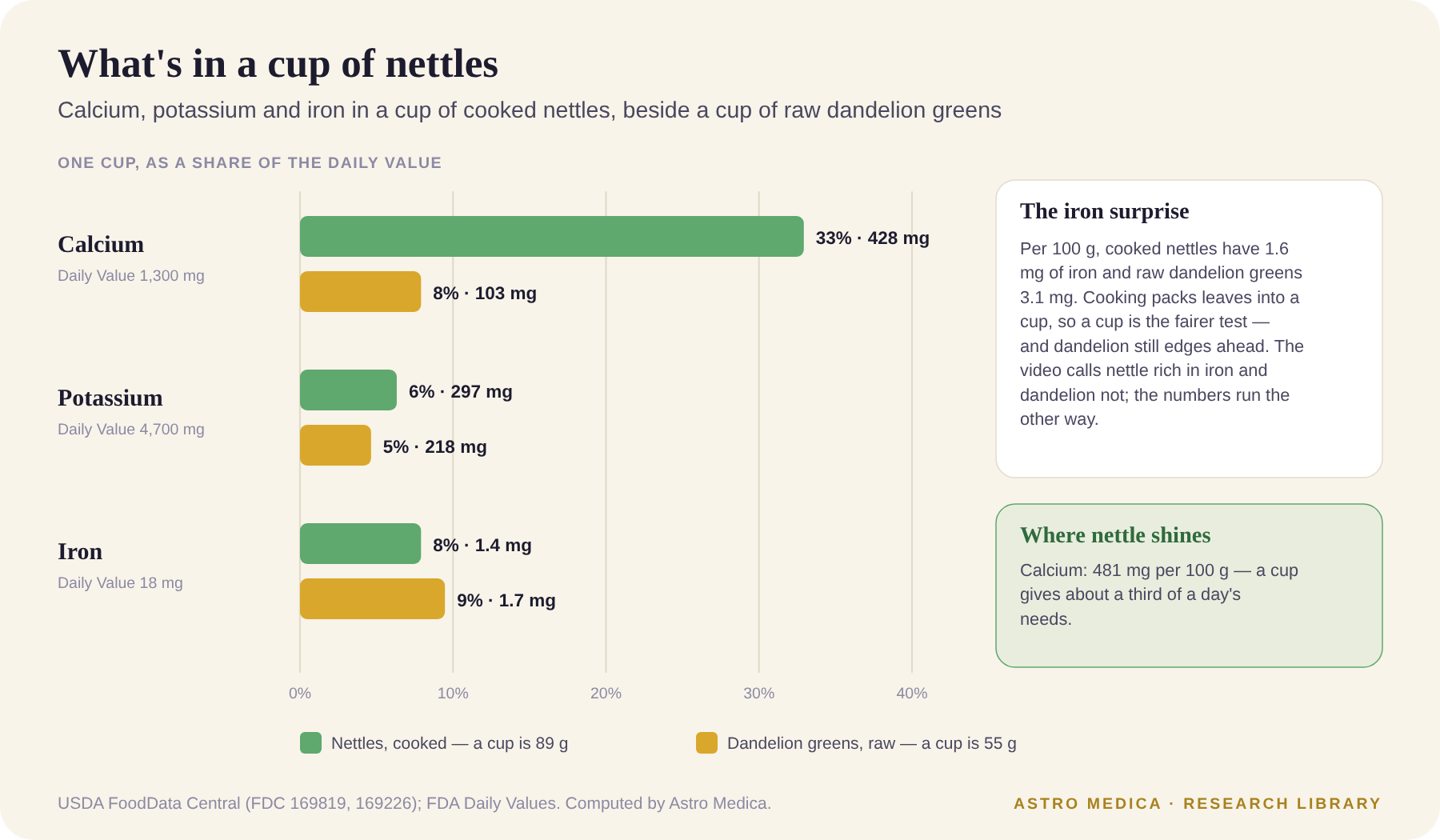
In Sajah Popham's spring tonics lesson, nettle leaf is the “mineral powerhouse”: a food to cook, a gentle diuretic, a tonic for the blood and a remedy for hay fever. The calcium is real — a cup of cooked nettles gives a third of a day's needs — but the iron is not: nettles have about half the iron of dandelion greens, which the same lesson calls “not super rich in iron”. One small trial supports nettle for hay fever; the urinary, joint and skin uses are traditional, recognised by the EU; anaemia, gout and bones are untested.
33% of a day's calcium in one cup of cooked nettles — 428 mg
10 min read · 12 sources (6 peer-reviewed)
 ▶ 40 min
Members · preview open
Plants & herbs · Video research · Mind & nervous system · Lemon balm · Sajah Popham
Lemon balm and the overactive thyroid
Herbalist Sajah Popham calls lemon balm the happiest herb on Earth and picks it for the overactive thyroid: it cools, calms the nerves and the racing heart, and — he says — acts on the thyroid itself. The calming is real in small trials, and one trial found fewer palpitations. The thyroid action is real too, but only in test tubes and rats in the 1980s: extracts kept the thyroid's stimulating signal, and the antibodies of Graves' disease, off their receptor. No trial has given lemon balm alone to people with an overactive thyroid, so it belongs beside medical care, not instead of it. Its traditional dose is a tea of 1.5–4.5 g of leaf; the EU monograph doesn't advise it under 12, for lack of data.
0 human trials of lemon balm alone for an overactive thyroid
16 min read · 52 sources (37 peer-reviewed)
The videos
Each one is summarised and fact-checked in its entry, with every claim timed to the video.
- Venus in excess and deficiency The Plant Path with Sajah Popham · 36 min · checked in “Venus in excess and deficiency” Read the summary → YouTube ↗
- The Sun's herbs The Plant Path with Sajah Popham · 49 min · checked in “The Sun's herbs: heart, warmth, vitality and spirit” Read the summary → YouTube ↗
- Hawthorn for the heart: the Sun's herbs The Plant Path with Sajah Popham · 9 min · checked in “Hawthorn, the heart herb” Read the summary → YouTube ↗
- Angelica for warmth: the Sun's herbs The Plant Path with Sajah Popham · 9 min · checked in “Angelica, the warming bitter” Read the summary → YouTube ↗
- Ashwagandha for vitality: the Sun's herbs The Plant Path with Sajah Popham · 6 min · checked in “Ashwagandha, the calm adaptogen” Read the summary → YouTube ↗
- St John's wort for the spirit: the Sun's herbs The Plant Path with Sajah Popham · 10 min · checked in “St John's wort, the midsummer flower” Read the summary → YouTube ↗
- Judith Hill on astrological medicine and herbal timing The Plant Path with Sajah Popham · 93 min · checked in “Judith Hill: time matters” Read the summary → YouTube ↗
- Burdock root: spring tonics Sajah Popham (YouTube) · 13 min · checked in “Burdock, the all-purpose alterative” Read the summary → YouTube ↗
- Dandelion leaf: spring tonics Sajah Popham (YouTube) · 8 min · checked in “Dandelion leaf, the potassium diuretic” Read the summary → YouTube ↗
- Nettle leaf: spring tonics Sajah Popham (YouTube) · 11 min · checked in “Nettle, the mineral powerhouse” Read the summary → YouTube ↗
- Lemon balm for hyperthyroidism Sajah Popham — The Plant Path, School of Evolutionary Herbalism · 40 min · checked in “Lemon balm and the overactive thyroid” Read the summary → YouTube ↗