Research Library · Planets & cycles · Video research · Mind & nervous system
☿ Mercury project — every summary and video →Mercury: the six sky phases
Gary P. Caton's new map of Mercury's cycle, the retrograde marching backwards through the elements, a body clock that turns with the sky — and what the research says about a rhythm of outward work and inward rest.
15 October 2026 15 min read ▶ 71-min video 55 sources · 28 peer-reviewed
In brief
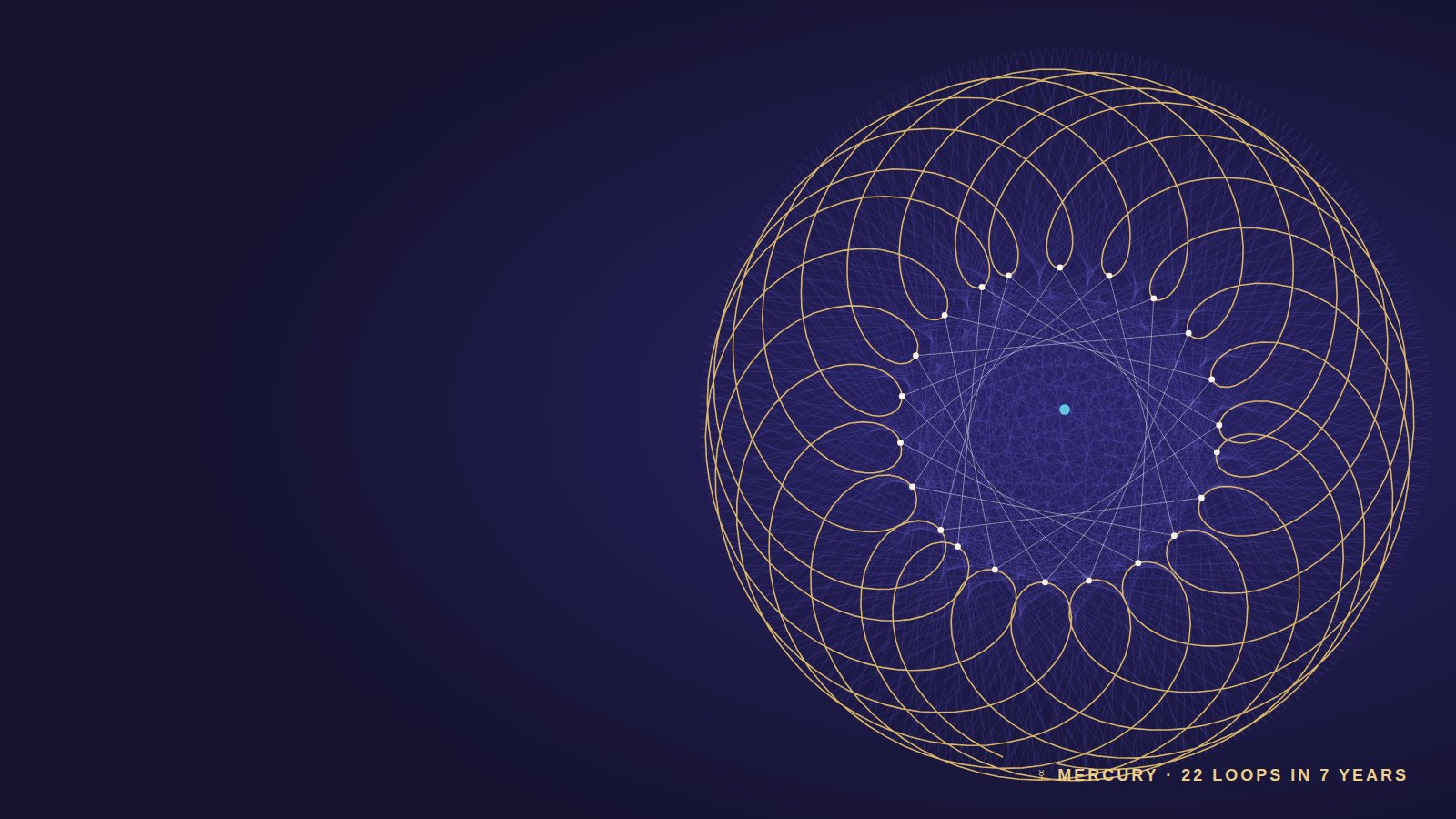
Every 116 days or so Mercury goes from morning star to evening star and back, and about three times a year it turns retrograde — three in one element at a time, stepping backwards from fire to water to air to earth over roughly seven years. In his new book, astrologer Gary P. Caton divides the cycle into six sky phases, each with a mythic face. We computed every date in this 71-minute interview to check it, and found the research behind its advice: rest in rhythm, protect your attention, and anchor in purpose.
Learn from the source
Gary P. Caton
Astrologer and author of Hermetica Triptycha, the books on Mercury and Venus behind the planet entries.
His books follow the planets' real cycles in the sky — the phases our Mercury and Venus summaries measure.
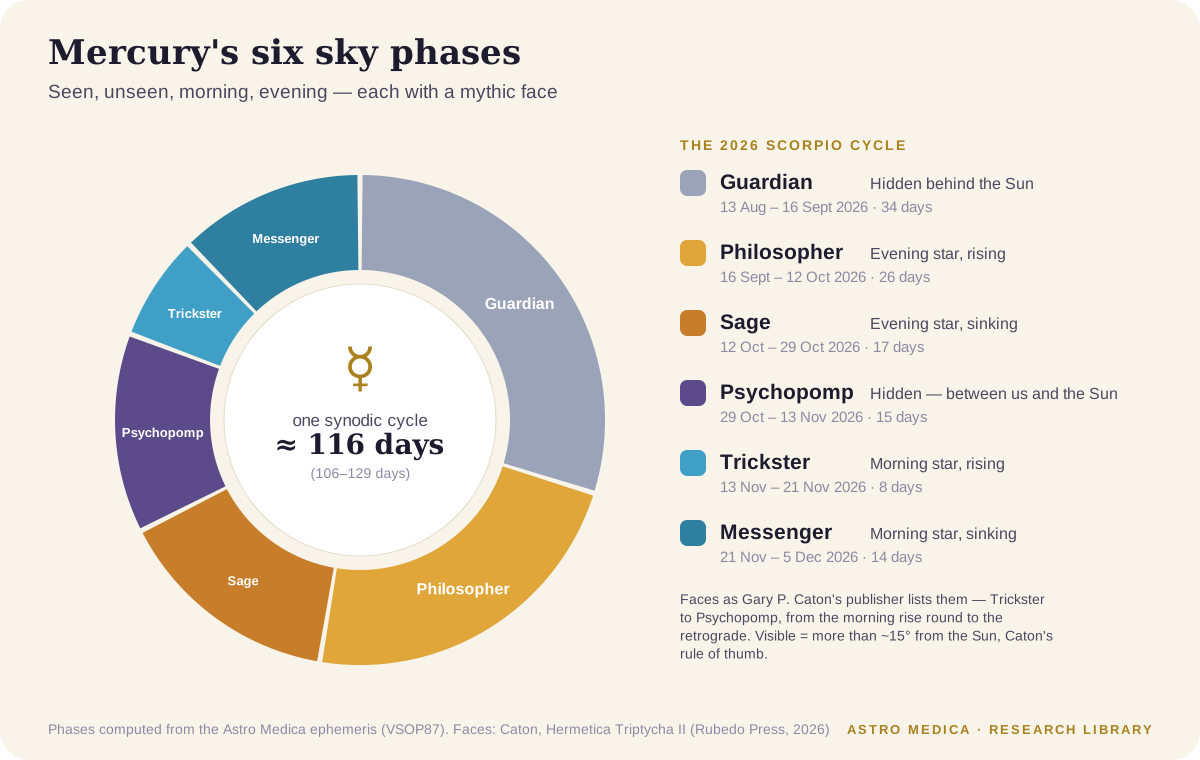
Gary P. Caton's map of Mercury's 116-day cycle
Six sky phases, six faces
Mercury runs a cycle with the Sun that lasts about 116 days (115.88 on average; between 2016 and 2030 anywhere from 106 to 129 days, because Mercury's orbit is so eccentric). In that time it rises as a morning star, slips into the Sun's glare behind it, returns as an evening star, then passes between us and the Sun — the retrograde — and is reborn in the east. Astronomers call it the synodic cycle; Babylonian astronomers were logging its first and last sightings more than 2,300 years ago.
For members
Read the whole summary
8 sections, 9 diagrams, the video with its chapters, 21 claims checked against the research, 55 sources with the names of the people who did the work and links to it — and downloads in PDF, Word, Excel and PowerPoint.
- 🔒 Backwards through the elements
- 🔒 Retrograde runs with the daily sky
- 🔒 The trickster you can't find
- 🔒 Riding the Mercury cycle
- 🔒 The Scorpio retrograde: a conscious descent
- 🔒 The direct station: a green light
- 🔒 The geometry of Mercury
The Research Library is part of every paid plan: Crescent, Half Moon and Full Moon.
More in this project
This is the first summary in the project — more are on the way.